JAY-AR B. ABANILLA
11 HUMMS-JOHN DEWEY
In order to be considered bullying, the behavior must be aggressive and include:
AN IMBALANCE OF POWER: Kids who bully use their power—such as physical strength, access to embarrassing information, or popularity—to control or harm others. Power imbalances can change over time and in different situations, even if they involve the same people.
REPETITION: Bullying behaviors happen more than once or have the potential to happen more than once.
Bullying includes actions such as making threats, spreading rumors, attacking someone physically or verbally, and excluding someone from a group on purpose.
*TYPES OF BULLYING
*EFFECTS OF BULLYING
*WHERE AND WHEN BULLYING HAPPENS
*FREQUENCY OF BULLYING
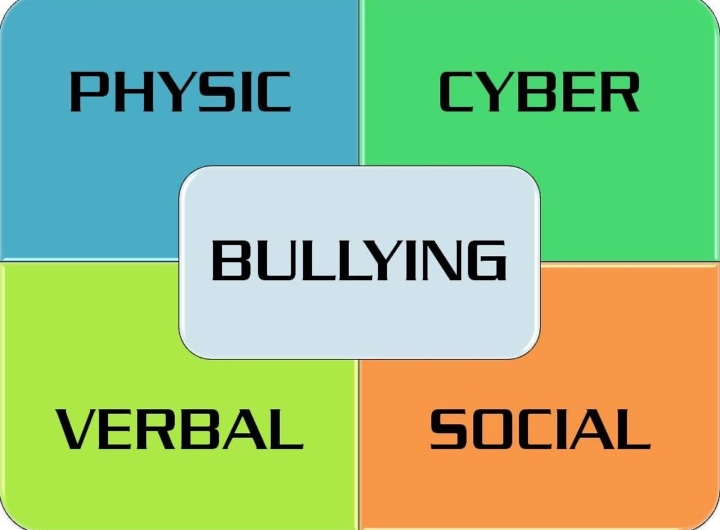
TYPES OF BULLYING
There are four types of bullying:
*VERBAL BULLYING is saying or writing mean things. Verbal bullying includes:
*Teasing
*Name-calling
*Inappropriate sexual comments
*Taunting
*Threatening to cause harm
*SOCIAL BULLYING, sometimes referred to as relational bullying, involves hurting someone’s reputation or relationships. Social bullying includes:
Leaving someone out on purpose
Telling other children not to be friends with someone
Spreading rumors about someone
Embarrassing someone in public
*PHYSICAL BULLYING involves hurting a person’s body or possessions. Physical bullying includes:
*Hitting/kicking/pinching
*Spitting
*Tripping/pushing
*Taking or breaking someone’s things
*Making mean or rude hand gestures
Where
*CYBER BULLYING which involves sending hurtful messages over digital devices like computers and cell phones.

EFFECTS OF BULLYING
*Bullying can affect everyone—those who are bullied, those who bully, and those who witness bullying. Bullying is linked to many negative outcomes including impacts on mental health, substance use, and suicide. It is important to talk to kids to determine whether bullying—or something else—is a concern.
*KIDS WHO ARE BULLIED
Kids who are bullied can experience negative physical, social, emotional, academic, and mental health issues. Kids who are bullied are more likely to experience:
*Depression and anxiety, increased feelings of sadness and loneliness, changes in sleep and eating patterns, and loss of interest in activities they used to enjoy. These issues may persist into adulthood.
*Health complaints
*Decreased academic achievement—GPA and standardized test scores—and school participation. They are more likely to miss, skip, or drop out of school.
A very small number of bullied children might retaliate through extremely violent measures. In 12 of 15 school shooting cases in the 1990s, the shooters had a history of being bullied.
*Kids Who Bully Others
Kids who bully others can also engage in violent and other risky behaviors into adulthood. Kids who bully are more likely to:
*Abuse alcohol and other drugs in adolescence and as adults
*Get into fights, vandalize property, and drop out of school
*Engage in early sexual activity
*Have criminal convictions and traffic citations as adults
*Be abusive toward their romantic partners, spouses, or children as adults.
BYSTANDER
Kids who witness bullying are more likely to:
Have increased use of tobacco, alcohol, or other drugs
Have increased mental health problems, including depression and anxiety
Miss or skip school
WHERE AND WHEN BULLYING HAPPENS
Bullying can occur during or after school hours. While most reported bullying happens in the school building, a significant percentage also happens in places like on the playground or the bus. It can also happen travelling to or from school, in the youth’s neighborhood, or on the Internet.
FREQUENCY OF BULLYING
There are two sources of federally collected data on youth bullying:
The 2019 School Crime Supplement to the National Crime Victimization Survey (National Center for Education Statistics and Bureau of Justice) indicates that, nationwide, about 22% of students ages 12–18 experienced bullying.
The 2019 Youth Risk Behavior Surveillance System (Centers for Disease Control and Prevention) indicates that, nationwide, 19.5% of students in grades 9–12 report being bullied on school property in the 12 months preceding the survey.
THE RELATIONSHIP BETWEEN BULLYING AND SUICIDE
Media reports often link bullying with suicide. However, most youth who are bullied do not have thoughts of suicide or engage in suicidal behaviors.
Although kids who are bullied are at risk of suicide, bullying alone is not the cause. Many issues contribute to suicide risk, including depression, problems at home, and trauma history. Additionally, specific groups have an increased risk of suicide, including American Indian and Alaskan Native, Asian American, lesbian, gay, bisexual, and transgender youth. This risk can be increased further when these kids are not supported by parents, peers, and schools. Bullying can make an unsupportive situation worse.
WHAT YOU CAN DO?
Adults have a major role in helping to prevent bullying. Find out what you can do:
*PARENTS
*EDUCATORS
*COMMUNITY
*PARENTS-Parents play a key role in preventing and responding to bullying. If you know or suspect that your child is involved in bullying, there are several resources that may help.
*Recognize the warning signs that your child is involved in bullying. They could be being bullied, bullying others, or witnessing bullying. Although these signs could signal other issues, you should talk to your child if they display any sort of behavioral or emotional changes. Many times kids won’t ask for help, so it is important to know what to look for. If your child is at immediate risk of harming himself or others, get help right away.
*Learn what bullying is and what it is not. Understanding what bullying is is the first step in forming a plan to prevent or respond to bullying with your child. Many behaviors that look like bullying may be just as serious, but may require different response strategies. You can also learn about:
The frequency of bullying;
Who is at risk for being bullied and bullying others; and
The effects of bullying
*Cyberbullying often requires different strategies than in-person bullying. Learn how to work with your kids to prevent cyberbullying and how to respond when it occurs.
*Utilize tips and tools to talk to your child about bullying. Opening lines of communication before your child is involved in bullying makes it easier for them to tell you when something happens. It is also important to work with a school to help prevent bullying before it starts.
If you know or suspect bullying has occurred, learn how to find out what has happened with your child. Understanding what has happened can also help in communicating with school or community officials about the situation.
*If you have determined bullying has occurred, learn how you and school or community officials can work together to support your child, whether they were bullied, bullied others, or witnessed bullying. Learn also about considerations for specific groups.
*If bullying is occurring at school, learn about what your state requires schools to do in your state’s anti-bullying law. Learn also about federal laws that require schools to address harassment based on race, color, national origin, sex, and disabilities and ways to report situations that have not been adequately addressed to the U.S. Departments of Education and Justice.
*If you have worked with your child and your school and need additional assistance, find resources to help address the situation.
*EDUCATORS-Schools are a primary place where bullying can happen. Helping to establish a supportive and safe school climate where all students are accepted and knowing how to respond when bullying happens are key to making sure all students are able to learn and grow. There are many tools on StopBullying.gov specific for teachers, administrators, and other school staff.
*Learn what bullying is and what it is not. Many behaviors that look like bullying may be just as serious, but may require different response strategies. You can also learn about what to look for as warning signs that some of your students might be involved in bullying and who might be at more risk for being involved. Know about special considerations for specific groups.
*Establish a safe school climate. Often the first step to preventing bullying is making sure the students, teachers, and administrators alike are educated about bullying. Tools like the School Bus Drivers Training and Classroom Teacher Training can help. For kids, tools like these webisodes can help them learn about bullying.
*Learn how to engage parents and youth in the building a positive school climate. Learning how to talk about bullying with youth is a critical step.
*Know about your obligations under your state’s anti-bullying law. Learn also about federal laws that require schools to address harassment based on race, color, national origin, sex (including sexual orientation and gender identity), disability, and religion. Work to establish rules and policies to help the entire school community understand the expectations around bullying, how to report it, and the procedures for investigating and responding when something happens.
*Assess bullying in your school and understand how your school compares to national rates of bullying.
*Respond when bullying happens. Learn how to stop it on the spot, find out what happened, and support all students involved.
*Avoid misdirections in bullying prevention and response strategies.
*Utilize free Federal and Non-Federal Resources on bullying.
*COMMUNITY-As an adult in the community, you play an important role in ensuring all children are safe from bullying. Whether you work in law enforcement, mental health services, community or youth organizations, or any other role that works with children, there are resources to help you take action against bullying.
*First, understanding what bullying is and what it is not is critical in forming bullying prevention strategies. It is also good to know what your state’s laws are about bullying. Some laws, such as in Washington, D.C., cover community organizations as well as schools.
*Utilize the community action planning toolkit to host anti-bullying events in your community and develop a comprehensive strategy for bullying prevention.
*Explore other Federal and Non-Federal resources that might help you in planning your bullying prevention work.
*If you know or suspect bullying is taking place in the community, learn how to respond.
*Learn more about working in the community, including potential partners and additional strategies.


